
How I save, spend & live with purpose
Here’s where most financial coaches will tell you their origin story—how they paid off $60,000 in student loans in five years or overcame a credit card-fueled shopping addiction. My story is much simpler.

Who I am

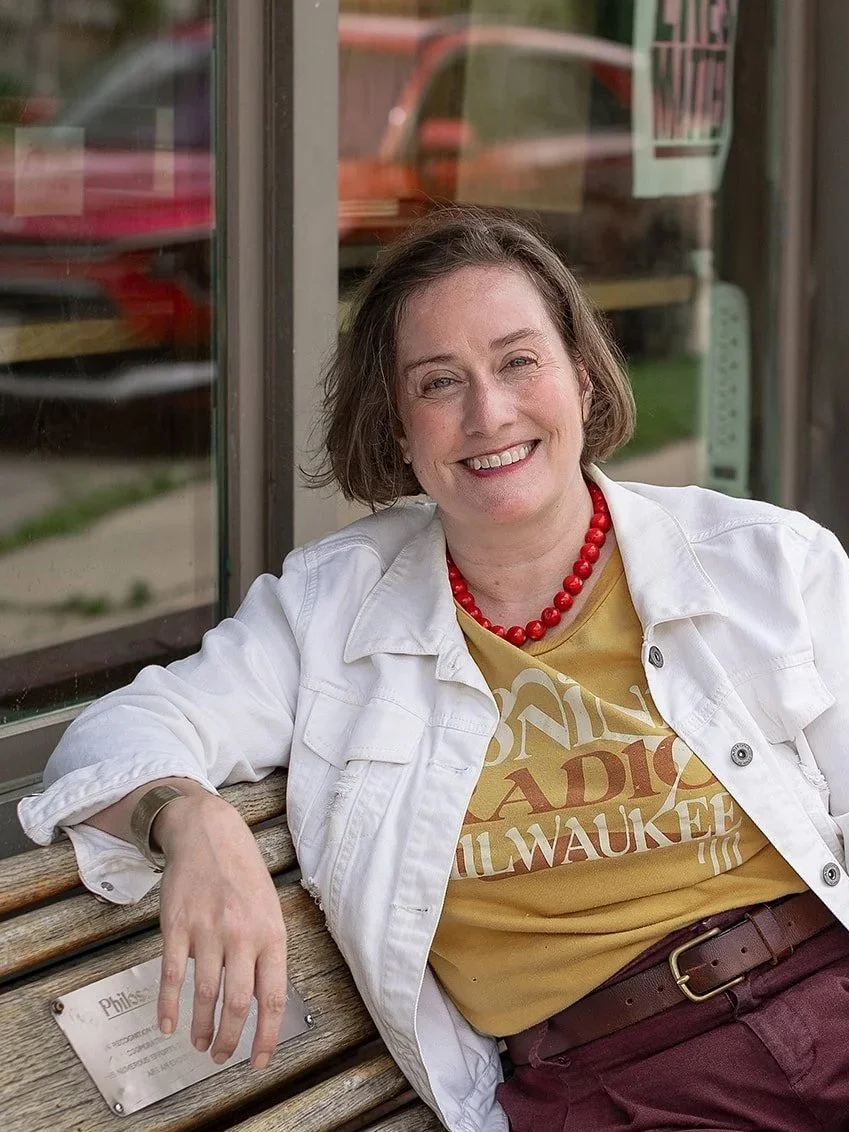
Hi. I’m Erin. I live in Milwaukee with my two cats.
I grew up with a library card in one hand and a calculator in the other. That mix of curiosity (thanks, Mom) and practicality (thanks, Dad) still describes me pretty accurately. When I got out into the wider world, I also realized not everyone had learned to be as practical about money and as curious about economics as I was.
Over the years I managed to build a career that used both sides of my skill set. But a particularly rough year of unexpected life changes shook me out of my comfortable routine. And I decided not to go back.
Though my job description has changed, my goal remains the same—to provide people with the information they need to make their lives better. As a content strategist, I spent years making complex ideas understandable and everyday items compelling. Few things in life are as pervasive—and confusing—as money and personal finance.
Now I’m a financial coach and educator who helps creatives and mission-driven people through the process of balancing both their values and their budget. I’ve experienced the instability and the freedom inherent in creative work, and I understand what it’s like to navigate layoffs and anxiety, hustle culture and insomnia. So like you, I know the goal isn't money; the goal is a life you actually like.

What I know
I’m an Accredited Financial Counselor® (AFC) candidate, which means I’ve completed the educational certification program overseen by the Association for Financial Counseling Planning and Education® (AFCPE), adhere to their professional code of ethics, and am in the process of completing 1000 hours of practical experience required for full certification.
Like Certified Financial Planners and other financial professionals, AFCs commit to a fiduciary standard to always do what is in the best interest of the clients I work with. But as an AFC, I don’t sell products or offer investment advice; I provide education, strategies and support for people looking for help with everyday money management.

What I believe
WorthWhile Money is based on three guiding principles: empowerment, equity and abundance. For me, those things mean that:
The amount of money we have impacts the choices we have in life, but it shouldn’t control the choices we make. You’re doing the best you can with the knowledge and resources you have. With more knowledge, resources and encouragement, you can do better.
Capitalism is not inevitable, ideal or equitable. By prioritizing profit, private ownership and wage labor, it encourages resource extraction and discourages stewardship, overvalues hard capital while undervaluing human capital, and rewards exploitation while punishing reciprocity.
Money is a mode of exchange, not a measure of virtue. You are not your job, your net worth is not a measure of your self-worth. Meritocracy is a myth and the Protestant work ethic is bullshit (According to the Economic Policy Institute, worker productivity has increased 86% since 1979, while hourly pay has only increased 32%). Oh, and the prosperity gospel is poison (Don’t take my word for it, go right to the source: “For the love of money is the root of all evil.” - Timothy 6:10).
Money isn’t our only resource. We’ve been programmed to try and solve every problem with money. Instacart instead of asking your neighbor for a cup of sugar. Let’s look to our community first before buying ourselves out of a jam. Money can buy happiness, but only up to a point (and that point is an income somewhere between $70,000 and $150,000 a year). Experiences, not things, are what makes us happy.
Abundance is a mindset. It’s quieting the wanting mind, it’s being satisfied with enough. Basic human needs should not be commodified. There is enough to go around; anyone who says differently is trying to sell you something. (The World Health Organization estimates that around 828 million people were affected by hunger in 2021. Meanwhile, global agricultural systems produce 4 million metric tons of food each year. If the food were equitably distributed, this would feed an extra one billion people.)